
Snapchat is a popular messaging app, and its disappearing photos, vanishing chats, and silent notifications are often seen as part of its appeal. However, these same features can also create opportunities for snapchat cheating, where conversations or interactions are intentionally hidden from a partner.
This guide is designed for adults who suspect possible snapchat cheating in their relationship. It explains what the app can realistically do, which behavior changes may raise questions, lawful and ethical ways to seek clarity, and how to respond constructively once you have a clearer understanding of the situation.
PART 1. Why Snapchat Makes Cheating Easier
Snapchat is designed with privacy in mind. Compared with iMessage, WhatsApp, or Instagram DMs — where conversations live in a searchable history — Snapchat treats almost every message as ephemeral by default. That single design choice changes how people behave on it.
Features That Encourage Anonymity
- Disappearing by default: Chat text disappears after being viewed or after 24 hours; snaps disappear in seconds. No opt-in required.
- Private Stories: Users can publish content visible only to a hand-picked subset of contacts — including subsets that exclude you.
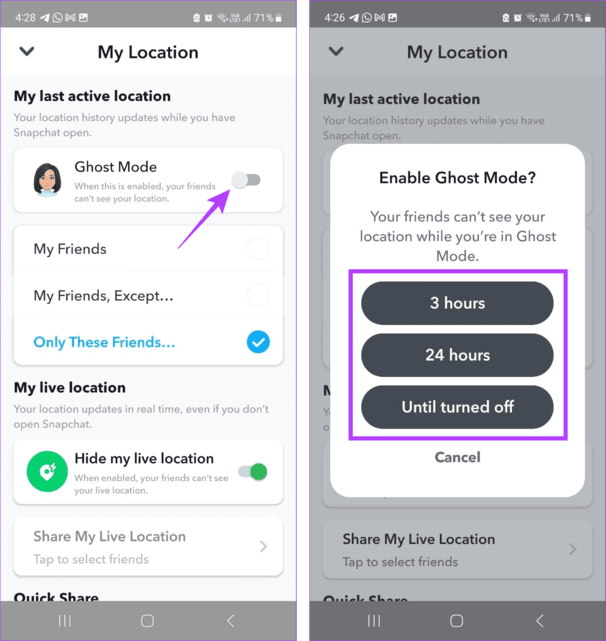
- Snap Map with Ghost Mode: Live location can be turned off invisibly, without any notification to other users.
- No default backup: Unlike WhatsApp, conversations aren't synced to cloud storage the user can later search or screenshot.
- Multi-account sign-in: Recent versions of Snapchat allow signing into multiple accounts inside the official app — no third-party clone needed.
How Snapchat compares to other apps for hidden communication. WhatsApp, Instagram, Telegram, and Signal all support disappearing messages — but each requires the user to opt in per conversation. On Snapchat, disappearing is the baseline, persistent is the exception. That's the meaningful difference and a major reason it gets singled out in cheating contexts.
PART 2. 10 Common Signs of Cheating on Snapchat
Important: any one of these signs in isolation is rarely conclusive. They carry weight in combination, and especially when they represent a clear change from your partner's normal baseline. Under each sign we've added a “Could also mean” line — these are real, innocent explanations. Ignoring them leads to false accusations that damage relationships on their own.
Sending more photos or videos instead of text
A sudden shift toward sending disappearing images or videos — rather than written messages — could be an attempt to avoid leaving a digital trail.
Could also mean: a friend group that prefers video chat; new interest in photography; a temporary phase while learning a new language or accent.
Frequent use of privacy settings
If your partner often tweaks their Snapchat privacy settings or spends time in the app's settings menu, they might be limiting visibility or hiding content from specific people.
Could also mean: response to a stalker, ex-partner, or unwanted contact; recent harassment they haven't told you about.
Missing “Best Friends” from chat list
Snapchat highlights frequent contacts at the top of the chat list. If your partner used to pin you or others there but suddenly removes all “best friends,” it could be to hide key conversations.
Could also mean: a general phone cleanup, or a deliberate digital declutter — some people remove all pinned contacts periodically.
Regular use of “Clear Cache” or “Delete Conversation”
Snapchat makes it easy to erase chat history and app data. If your partner often clears conversations or data, it might be to cover up past messages.
Could also mean: low phone storage; a habit picked up after a previous data leak or hacked account.
Frequent switching of “Disappearing Chat” mode
Snapchat's disappearing chat mode deletes messages after they're viewed. If your partner regularly turns this setting on and off in certain conversations, it might be a way to keep chats hidden without raising too much suspicion.
Could also mean: work-related conversations where they've been asked to keep things confidential; surprise planning (a gift, a trip, a proposal).
Using Ghost Mode on Snap Map to hide location
Snap Map lets users share their live location — but also includes a “Ghost Mode” to hide it. If your partner frequently activates Ghost Mode or other anonymity options, it could be to keep their whereabouts private — even from you.
Could also mean: a general privacy preference; concern about someone else on their friends list seeing where they are.
Suspicious changes in the “Best Friends” list
Snapchat automatically displays the people your partner interacts with the most. If unfamiliar names suddenly appear — or someone you know disappears from the list — it might be a sign of new, intense communication they're not being upfront about.
Could also mean: a new colleague, gym partner, or family member they've been catching up with; a sibling going through a hard time.
Maintaining Snapstreaks with people you've never heard of
Snapstreaks show consistent daily interactions. If your partner has active streaks with people they've never mentioned, it could signal a deeper connection forming in private.
Could also mean: a streak from years ago they don't want to lose; a casual acquaintance they keep up with out of habit, not intimacy.
Being defensive about their friends list
Snapchat doesn't make friends lists public, but if your partner becomes nervous or evasive when asked about their contacts, it might indicate they're hiding certain relationships.
Could also mean: a general dislike of being questioned, especially if you've asked similar questions repeatedly; a reaction to feeling controlled rather than to having something to hide.
Using Snapchat at odd or inappropriate times
If your partner suddenly starts using Snapchat late at night, during work hours, or in secluded spots — especially if this is out of character — it could suggest they're having private conversations they don't want others to see.
Could also mean: insomnia, anxiety, or a friend in a different time zone going through something difficult.
These behaviors matter most when several appear together over weeks, and when they represent a real shift from how your partner used the app before. A single observation, viewed in isolation, often turns out to be nothing.
PART 3. Reading Snapchat's Built-in Signals
Snapchat encodes a surprising amount of relationship information in small icons most users never decode. If you're piecing together what you've seen openly — or your partner has agreed to show you their account — these are the indicators worth knowing.
Friend emoji reference
- 💛 Yellow heart (Best Friends) — you and this person are each other's #1 most-snapped contact.
- ❤️ Red heart — you've been Best Friends for two weeks in a row.
- 💕 Pink hearts — you've been Best Friends for two months in a row.
- 😬 Grimacing face — you share a #1 Best Friend (you're both snapping the same person most).
- 😎 Sunglasses — one of your Best Friends is also one of theirs.
- 🔥 Fire (Snapstreak) — daily back-and-forth snaps; the number is the day count.
- ⌛ Hourglass — a Snapstreak is about to end (no snap exchanged in ~20 hours).
- 🎂 Birthday cake — it's that person's birthday today on Snapchat.
A red or pink heart with someone you've never heard of is worth asking about — it represents weeks of being someone's #1 contact. So is a high-day fire emoji with an unknown name; Snapstreaks require daily snap exchanges, every day, with no skips.
Snap Score
Snap Score is the number under a user's name in their profile. It increases each time they send or receive a snap. A score climbing several hundred points per day signals heavy active snapping — but it's a volume measure, not a recipient list. You won't learn who they're snapping from the score, only how much.
Snap Map
Snap Map shows a user's Bitmoji at their current location to whoever they've approved. If your partner previously shared location with you and has switched to Ghost Mode, or their Bitmoji shows up in unexpected places, that's information worth noticing. Ghost Mode is a deliberate, manual setting — it doesn't turn on by accident.
Fully compatible with all popular Android devices, including Samsung, Xiaomi, OPPO, Infinix, Google Pixel, Huawei, Honor, etc. It helps parents and users stay aware of digital activity patterns, including messaging behavior that may raise concerns in cases related to snapchat cheating.
PART 4. How to Tell If Someone Has a Second Snapchat Account
Snapchat doesn't make multiple accounts publicly visible, and recent app versions actually make multi-account use easier than it used to be. A few practical signs worth looking for:
1. Check Snapchat's built-in multi-account switcher
Recent versions of Snapchat support official account switching from the profile menu. If you can see your partner's profile screen, tapping their Bitmoji at the top-left reveals whether multiple accounts are signed in. This is the most direct check, and it doesn't require any third-party tool.
2. Check for accounts linked to alternate phone numbers or emails
If you know a secondary email or work phone number they use, save those details in your contacts. Then open Snapchat and use the “Add by Contacts” feature to see whether any accounts come up tied to those details.
3. Pay attention to app notifications and icons
If you notice Snapchat notifications briefly appearing on their phone — but disappearing quickly or not matching the conversations you can see — it could point to a second account. Similarly, if Snapchat isn't showing a notification badge even when messages are clearly arriving, they might be signed in to a different account in the background.

4. Look for clone or dual-app installations
Some users install cloning apps (Parallel Space, Dual Space, Island, or Android's built-in Work Profile) to run two versions of Snapchat at once. A duplicated Snapchat icon — often with a slightly different badge, or hidden in an app folder — is a strong sign of a second account being used. Newer phones make this easier than ever; older instructions assuming this is rare are out of date.
5. Use Snapchat's “Quick Add” or friend suggestions
Snapchat sometimes suggests accounts based on contacts and mutual connections. If you see a suspicious-looking account in Quick Add — no profile picture, a slightly altered version of a username you recognize, or a contact who already “shouldn't” be suggested — it may be a secondary profile.
6. Ask, framed casually
A direct but non-accusatory question can reveal more than detective work. “A lot of people I know keep two Snapchats — one for close friends, one for everything else. Do you do that?” This frames multi-account use as ordinary, lowering defensiveness. Their answer — and the way they answer — tells you something either way.
These signs raise reasonable suspicion, but they don't confirm anything on their own. When in doubt, open communication is still the most reliable route to clarity.
PART 5. What to Do If You Suspect Cheating
If you've seen enough signs to genuinely worry — but you don't have proof and aren't sure what to do next — these steps tend to lead to better outcomes than the first impulse usually does.
Step 1 Take 48 hours before you act
Adrenaline shrinks your peripheral vision. The signals you're seeing might be real; they also might be a story your brain is constructing because something else feels off — work stress, a recent argument, a difficult anniversary. Give yourself two days of not acting on the impulse, and write down what you've actually observed, separated from what you've concluded. The list usually looks different on paper.
Step 2 Have the conversation, with a script
Accusatory conversations fail the same way: opening with an accusation triggers defensiveness, which feels like proof, which escalates the accusation. A working script looks more like:
“I've noticed [specific observation] and it's been on my mind. I don't want to make assumptions, but I also can't pretend I haven't noticed. Can we talk about it?”
Specific, observed behavior. Not “I know you're cheating.” Not “Why are you always on Snapchat?” The goal of the first conversation is to put the issue on the table, not to win it.
Step 3 Decide what you actually need
There's a difference between needing proof and needing reassurance. If reassurance — combined with visible changes in behavior — would be enough for you, you don't need evidence. If you've reached the point where no verbal answer can settle it, you have a bigger question to face, and it's not really about Snapchat anymore.
Step 4 Set explicit boundaries going forward
If you continue together, vague reassurances (“it won't happen again”) aren't enough on their own. Specifics are: which behaviors are off-limits, what transparency looks like in practice (e.g., either of you can ask to see the other's Snapchat without it being treated as a hostile move), and how you'll check in over the next 90 days.
Step 5 Consider a therapist who specializes in digital-era infidelity
Online and ephemeral-app cheating is now a specific subfield in couples therapy. Therapists trained in Esther Perel's affair-recovery framework, or in the Gottman approach, have specific tools for the post-disclosure period that general counselors don't. Couples who use a structured program typically describe a 12–24 month rebuilding window.
PART 6. Snapchat Cheating FAQ
Q1: Is sending flirty snaps to someone else cheating if there's no physical contact?
For most couples, yes. The line in most relationship frameworks isn't physical contact — it's whether one partner is conducting an interaction the other would object to if they saw it, and whether it's being hidden. Both can be true without anyone leaving the house. This is often called “cyber infidelity” or “emotional infidelity,” and many couples treat it as serious as physical cheating.
Q2: Can a relationship recover after Snapchat cheating?
Many do. Outcomes are better when the partner who broke the agreement takes responsibility for both the action and figuring out why they did it — rather than the betrayed partner being left to police future behavior. Most affair-recovery frameworks describe a 12–24 month rebuilding period and recommend a couples therapist trained in the specific dynamics of digital infidelity.
Q3: Does Snapchat notify when someone screenshots a message or snap?
Yes, for most content — chats, snaps, and stories. Some workarounds exist (screen recording in certain configurations, or screenshotting from a second device pointed at the screen), and these usually bypass the notification.
Q4: Does Snapchat really delete all messages after they're read?
Most chats disappear after viewing, but either participant can save a message by long-pressing it. Saved messages stay in the chat with a grey background and are visible to both users. Snaps (photos/videos) can also be saved by the sender to Memories before sending. Screenshots are possible too, with notification (see Q3).
Q5: How can I tell if my partner has a Private Story I'm not on?
You can't directly — that's the design. Private Stories are only visible to people the creator has added. You won't see that one exists. You may, however, notice friends reacting in conversation to content you didn't see them post, or comments that don't match the public Story you can view.
Final Thoughts
Snapchat's disappearing messages, hidden friend lists, and location controls can make suspicious behavior harder to verify. In many cases, trying to secretly “catch” someone only creates more stress and damages trust, whether you find proof or not.
A healthier approach is to notice changes in behavior, communicate openly, and ask direct questions. Often, the way your partner responds to the conversation tells you more than trying to monitor every message or interaction.
Related Topics
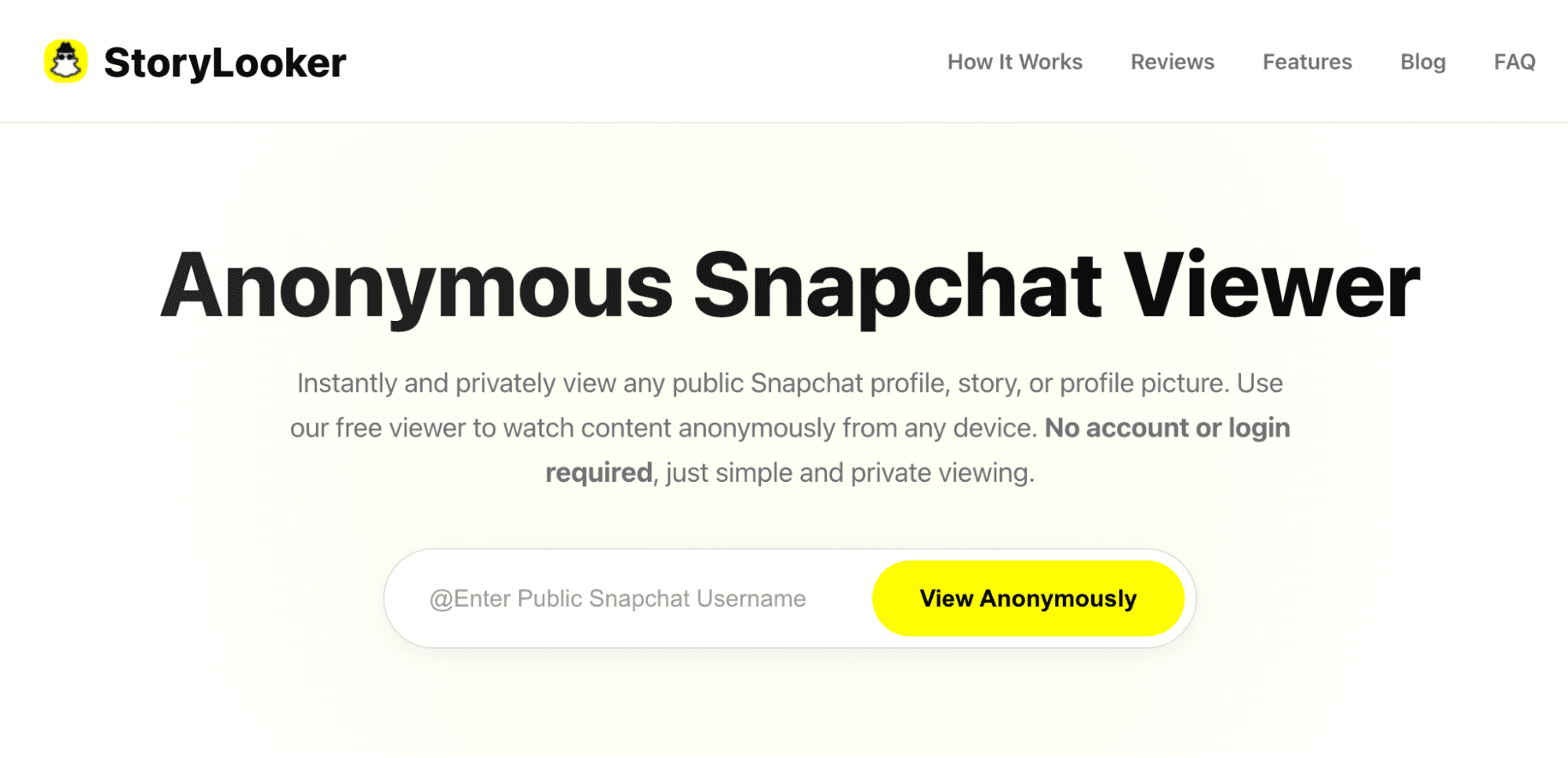
8 Best Snapchat Viewers to View Stories Anonymously in 2026
Discover the top 10 anonymous Snapchat story viewers in 2026 and learn how to view Snapchat stories anonymously.
How to Use WhatsApp Without a Phone Number (2026 Guide)
Wondering can you use WhatsApp without a phone number? Yes—learn 5 proven methods, including landline, prepaid SIM, and Companion Mode & key risks. 2026 guide.

How to Recover Deleted WhatsApp Messages Easily
Learn how to recover deleted WhatsApp messages on iPhone and Android using backups, tools, and apps like VigilKids to view deleted chats easily.