
Violent video games do not have a proven causal link to serious real-world violence. Some research and professional reviews associate violent games with small changes in aggressive thoughts, feelings, or behavior, but aggression is not the same as assault or crime. For parents, the more useful question is whether gaming is disrupting sleep, school, relationships, or emotional control.
This guide examines 10 common reasons people say video games cause violence, separates plausible concerns from unsupported conclusions, and gives parents a practical way to respond without blaming or banning every game.
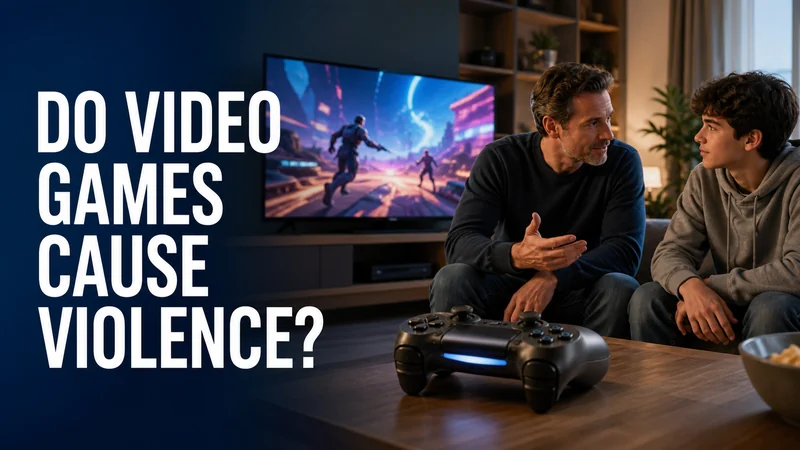
01. Do Video Games Cause Violence?
Current evidence does not justify saying that video games, by themselves, cause serious violence such as assault, homicide, or school shootings. The American Psychological Association's 2015 review reported an association with aggression but also found insufficient evidence connecting violent game play with criminal violence or delinquency.
The distinction matters because studies measure different outcomes. Pressing a louder noise button in a lab, reporting angry thoughts, arguing after a loss, hitting someone, and committing a violent crime are not interchangeable results.
| Outcome | What it can mean | What it does not prove |
|---|---|---|
| Aggressive thoughts | Hostile words or ideas immediately after play | Intent to harm someone |
| Irritability | Frustration after losing, conflict, or interruption | A violent personality |
| Aggressive behavior | Actions defined by a specific study | Criminal violence unless directly measured |
| Real-world violence | Physical harm or criminal conduct | That a game was the cause without stronger evidence |
In short, a study about short-term aggression cannot automatically answer whether games cause violent crime. Parents should look at the child's functioning and circumstances rather than treating a violent game as a diagnosis. When evaluating a specific combat title, a game-focused review such as this guide to whether Free Fire is appropriate for kids can help separate content concerns from broad claims about violence.
02. Why Do People Blame Violent Games?
The original debate contains 10 recurring concerns. Some deserve discussion, but none proves that a game causes a person to commit serious violence.
- Violence earns rewards. Many games award progress for combat, but a fictional reward system does not show that a player approves of real harm.
- Children imitate what they see. Children can copy media behavior, yet age, context, supervision, temperament, and the difference between pretend and real consequences all affect what happens next.
- Repeated exposure may reduce emotional reactions. Desensitization is studied, but a reduced response to fictional scenes is not the same as committing violence.
- Competitive play can trigger anger. Losing, lag, harassment, or abrupt interruption can lead to irritability; the immediate trigger may be frustration rather than violent content.
- Long sessions can increase isolation. This is a meaningful family concern when gaming replaces sleep, school, exercise, or relationships, regardless of whether the game is violent.
- Younger children may misunderstand mature content. Age and developmental readiness matter, which is why parents should check age ratings and content descriptors.
- News coverage often mentions a suspect's gaming. A person playing a popular game does not establish causation; other risk factors and the prevalence of gaming must be considered.
- Games exist within a wider media culture. Violent themes also appear in film, television, music, news, and history, so isolating games may oversimplify exposure.
- Some studies find small aggression effects. These findings should be described by the outcome measured, not translated automatically into assault or crime.
- Vulnerable players may react differently. A child's stress, trauma, bullying, family conflict, impulsivity, and mental health can shape behavior; the game may be one part of a larger situation.
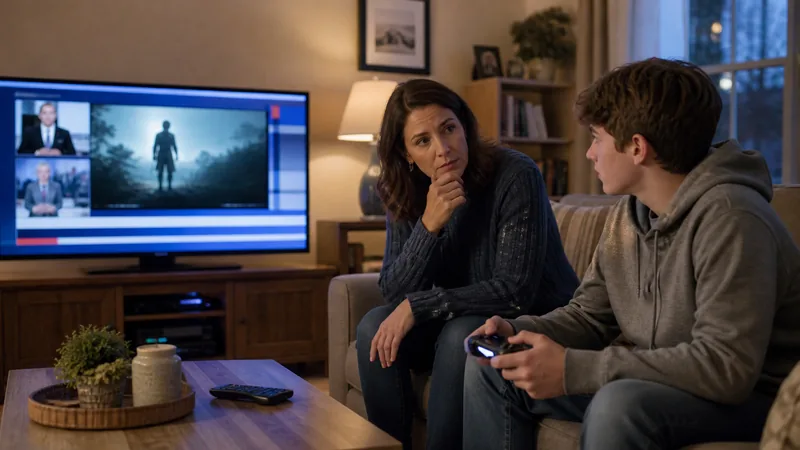
Better question for parents
Instead of asking only “Is this game violent?”, ask “What happens before, during, and after my child plays—and is gaming crowding out sleep, school, movement, or relationships?”
Online outrage can also make the debate feel more certain than the evidence is. Understanding how rage bait provokes emotional reactions can help families recognize when a viral post is designed to generate anger rather than explain research carefully.
03. What Does Research Actually Show?
The research is debated because studies use different definitions, time frames, age groups, and methods. A careful reading supports three bounded conclusions:
- Violent game content may be associated with small or short-term changes in aggression-related outcomes in some studies.
- The evidence does not establish that violent games cause serious criminal violence.
- Individual and environmental context—including family stress, peer conflict, sleep, and existing emotional difficulties—matters when evaluating a particular child.
Parents should also avoid the opposite overstatement: “games never affect anyone.” Content, competition, online interactions, sleep loss, and frustration can affect mood or behavior. The accurate conclusion is narrower: gaming content is one possible influence, not a stand-alone explanation for serious violence. For a platform-specific example, the guide to Roblox parental controls shows how content access and online interaction settings can be managed separately.
04. When Can Gaming Be Beneficial?
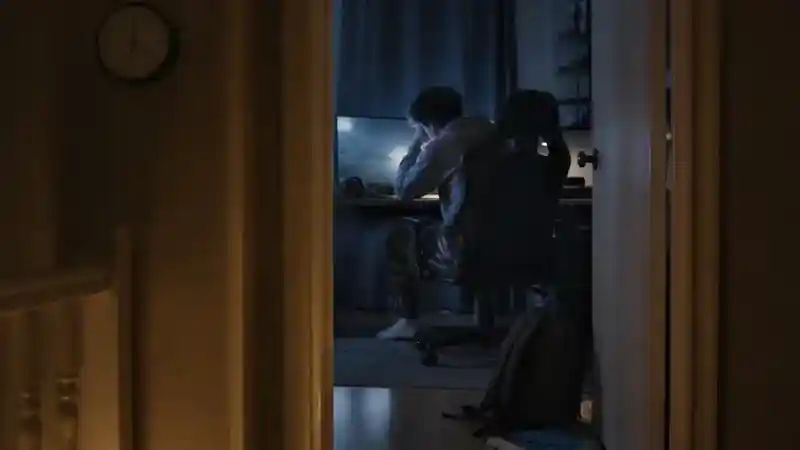
Gaming can support enjoyment, mastery, problem-solving, creative play, and social connection when it fits within a healthy routine. Benefits depend on the game, the player, the social environment, and what gaming displaces.
- Cooperative games can create shared goals and communication.
- Challenging games can reward persistence, planning, and learning from failure.
- Online play can maintain friendships when communication is respectful and age-appropriate.
- Games can provide recreation and stress relief when they are one coping tool among several.
Balance is better judged by the whole day than by one universal hour limit. The American Academy of Pediatrics' Family Media Plan emphasizes content, communication, sleep, physical activity, screen-free routines, and whether media crowds out important activities. Families looking for browser-based play options should also review the access and safety trade-offs of unblocked games for kids rather than assuming “free to play” means age-appropriate.
05. What Warning Signs Matter More Than Genre?
A child's loss of control and functional impairment are more actionable than the presence of fictional combat alone. The World Health Organization defines gaming disorder around impaired control, increasing priority given to gaming, continued play despite negative consequences, and significant impairment—normally evident for at least 12 months for diagnosis.

One late night or angry loss does not establish a disorder. Look for a persistent pattern across several areas. If stopping is the recurring source of conflict, parents can first learn how to set time limits on apps and then evaluate whether predictable boundaries improve the pattern.
- Repeatedly losing sleep or being unable to stop at agreed times
- Falling grades, missed responsibilities, or giving up previous interests
- Withdrawal from family or offline friends
- Continuing to play despite clear physical, emotional, or social harm
- Frequent explosive reactions that do not settle after the game ends
- Threats, self-harm talk, cruelty, access to weapons, or a specific plan to hurt someone
The final item is not a “gaming problem” to manage with screen limits. If a child makes a credible threat or there is immediate danger, prioritize safety and contact local emergency or mental-health services.
06. What Should Parents Do?
Start with observation and a shared plan, not a sudden total ban. A proportionate response can separate ordinary frustration from a persistent problem.
- Check the game. Review the age category, content descriptors, online interactions, in-game purchases, and rating summary where available.
- Watch or play together. Ask what the child enjoys, what makes them angry, who they play with, and how matches end.
- Track impact for one or two weeks. Record bedtime, school responsibilities, play periods, mood before and after play, and whether conflicts happen mainly around stopping.
- Set predictable boundaries. Protect sleep, homework, meals, movement, and offline relationships before deciding how much gaming fits.
- Use device and console controls. ESRB notes that parental controls can limit time, block games by rating, manage spending, and restrict online communication.
- Review the plan together. If problems continue despite consistent boundaries, involve a pediatrician or qualified mental-health professional.
If the broader issue is inappropriate material rather than violence, see what to do when a child watches inappropriate content. For device-level patterns, parents can also review how to check screen time on Android.
07. How Can VigilKids Support a Family Plan?
VigilKids is most relevant when a parent needs device-level context on a parent-managed Android phone after a family conversation and agreed safety rules. The current product page lists app management and screen activity insights, which can help parents compare usage patterns with sleep, school, and behavior.

VigilKids for Phone Monitoring
- Review installed apps and screen activity from a parent dashboard
- Requires installation and physical access to the parent-managed Android device
- Use patterns to start a conversation—not to label a child as violent
Families that only need game ratings, console time limits, or spending controls should start with the free controls built into the console or device. Monitoring software does not diagnose aggression, gaming disorder, or a mental-health condition.
08. FAQs
Do violent video games cause school shootings?
There is insufficient evidence to conclude that violent video games cause school shootings or other serious criminal violence. A shooter's gaming history alone does not establish causation.
Can violent games make a child more aggressive?
Some research associates violent games with small changes in aggression-related thoughts, feelings, or behavior, but results and definitions vary. Parents should assess persistent behavior and functioning rather than infer violence from game choice alone.
Should parents ban violent video games?
Not automatically. Check the age rating and content, consider the individual child, play or watch together, and set boundaries around sleep, school, spending, and online communication.
What is the difference between anger after gaming and gaming disorder?
Temporary frustration after losing is not gaming disorder. The WHO definition requires a persistent pattern of impaired control, increasing priority, continued play despite harm, and significant functional impairment.
When should parents seek professional help?
Seek help when gaming-related loss of control or impairment persists, or when there are major changes in sleep, school, relationships, or mental health. Treat credible threats, self-harm talk, or immediate danger as urgent safety issues.
09. Conclusion
Video games do not offer a simple explanation for real-world violence. Parents can take violent content seriously without confusing short-term aggression, ordinary frustration, problematic gaming, and criminal violence.
The most useful response is to examine the individual child: choose age-appropriate content, protect sleep and responsibilities, watch how the child handles winning and losing, and act when gaming causes persistent impairment. If device-level context is needed, VigilKids can support a parent-managed Android family plan after setup with required permissions.
Sources
Related Topics
Sexting on Snapchat: Signs, Risks & What Parents Should Do
Learn what sexting on Snapchat means, warning signs parents may notice, urgent risks, and the steps to take if a teen is pressured or threatened.
Roblox Parental Controls: Complete Guide for Parents
Everything parents need to know about Roblox parental controls — how to set them up, what they cover, and what to do when they're not enough.

Is TikTok Safe from NSFW Content?
Learn about NSFW content on TikTok and how...