
"I have grounded my child and I was looking around to see if he is on any inappropriate websites. I'm wondering how to set a time limit on his phone for apps he is spending too much screen time on — he has an iOS Apple phone, please help."
Do you ever open your phone just to check one message, then realize you've spent 45 minutes scrolling? You're not alone. Many of us spend more time on apps than we'd like to admit — whether it's social media, games, or video platforms.
Learning how to set time limits on apps isn't about removing fun from your day. It's about creating space to focus, rest, and stay present. Whether you're building better habits for yourself or guiding your child's screen time, knowing how to set app limits on any device — Android, iPhone, or Windows — can make a real difference. This guide walks you through every method, step by step.
Why You Should Set Time Limits on Apps
Most of us don't realize how much control apps have over our time until we try to cut back. It's not just about screen hours — it's about how that time shapes your habits, your focus, and your everyday life. Setting limits isn't just about saving time; it's about living better.
- For adults: Two hours of scrolling might feel relaxing, but it often replaces reading, movement, or real conversations. Cutting back helps you reconnect with what matters.
- For students: Kids who limit gaming and social media tend to sleep better and concentrate more. One school saw a 28 percent boost in focus after a month-long app-limit challenge.
- For parents: Children need structure, especially with screens. Too much app time can affect sleep, mood, and even eyesight — which is why many parents look up how to set a time limit on their child's phone.
Here's a quick overview of where to set app limits on each platform before we dive into the steps:
| Device | Built-in Tool | Passcode Protection? |
|---|---|---|
| Android | Digital Wellbeing | Via Family Link |
| iPhone / iPad / Mac | Screen Time | Yes (Screen Time passcode) |
| Windows / Xbox | Microsoft Family Safety | Yes (parent account) |
| Any device (parental) | VigilKids | Yes (parent dashboard) |
How to Set Time Limits on Apps on Android
If you want to know how to limit app time on Android, phones running Android 9 or later include a built-in toolkit called Digital Wellbeing. It tracks how much time you spend on your phone and specific apps, and lets you set daily limits. Once you hit a limit, the app is paused for the rest of the day — a simple way to stay mindful of screen time, especially for apps that easily pull you in.
Here are the three main ways to use it:
1 Set App Timers with Digital Wellbeing
App timers limit how long you can use a specific app or website in a day. Once the time runs out, the app is blocked until the next day.
- Step 1. Open Settings on your Android device.
- Step 2. Tap Digital Wellbeing & parental controls.
- Step 3. Choose App timers.
- Step 4. Select the app, multiple apps, or app categories you want to limit.
- Step 5. Tap Set timer and choose your time limit.
- Step 6. Pick which days the limit applies, then tap Done.
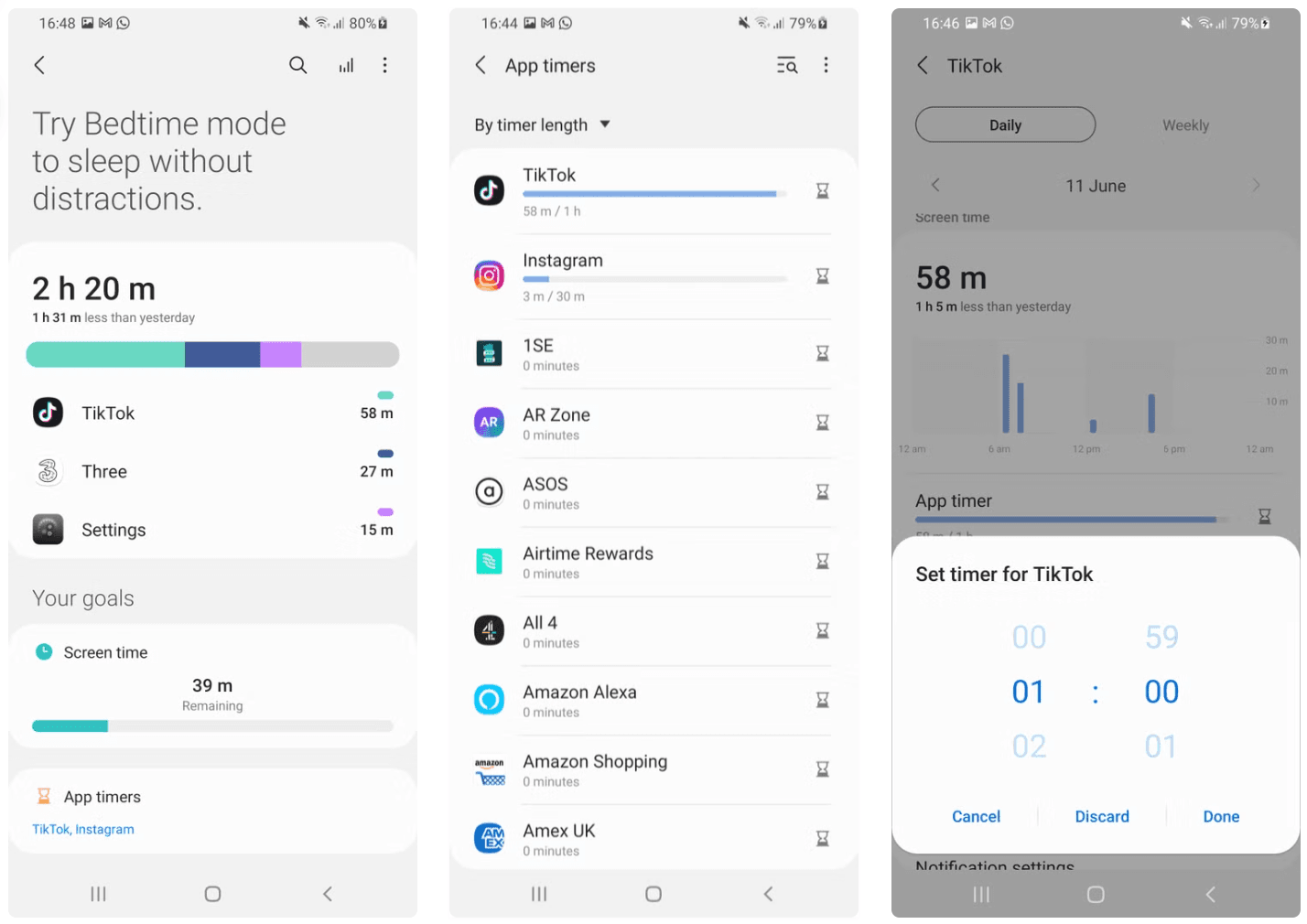
App timers apply daily and reset at midnight. You can also set timers for websites visited in Chrome.
What to keep in mind: Some apps or websites may not fully support the timer feature, and the customization options are fairly basic.
2 Enable Bedtime Mode for Healthier Evenings
Bedtime Mode reduces phone use at night by silencing alerts and switching your screen to grayscale. It runs on Android 10 and later, easing you away from your device when it's time to rest.
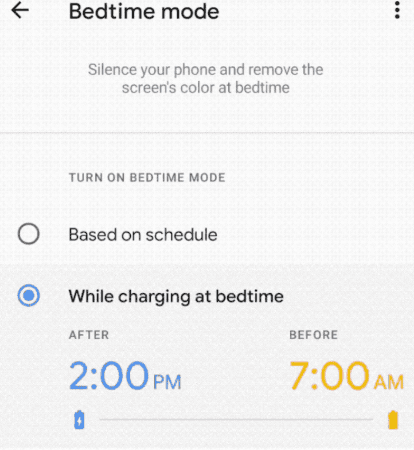
To use Bedtime Mode:
- Step 1. Open Settings.
- Step 2. Tap Digital Wellbeing & parental controls.
- Step 3. Select Bedtime mode.
- Step 4. Choose your preferred settings, including whether to enable Do Not Disturb.
- Step 5. Decide whether to turn it on manually or automatically at a set time.
When Bedtime Mode is active, your phone becomes much quieter, both visually and audibly, helping you step away from distractions at night.
What to keep in mind: If you enable Do Not Disturb, some important calls or messages may not come through unless you adjust the settings. Turning on "Repeat callers" allows calls from the same number if they call again within 15 minutes.
3 Use Focus Mode to Avoid Distractions
Focus Mode pauses distracting apps for a set period — ideal for study sessions, work hours, or any time you want to stay focused without interruptions.
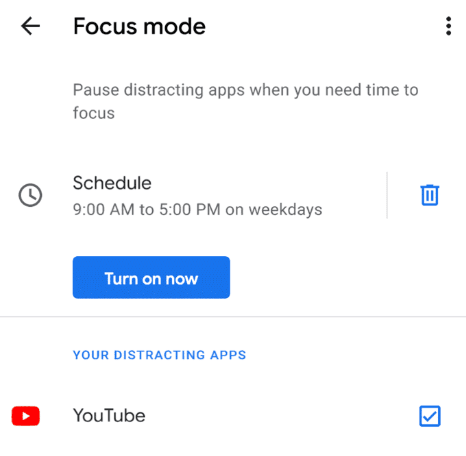
To set up Focus Mode:
- Step 1. Open Settings.
- Step 2. Tap Digital Wellbeing & parental controls.
- Step 3. Go to Focus mode.
- Step 4. Choose a preset mode or create a new one with Add mode.
- Step 5. Tap Stay focused, then select the apps you want to block.
- Step 6. Choose whether to start Focus Mode manually or schedule it automatically.
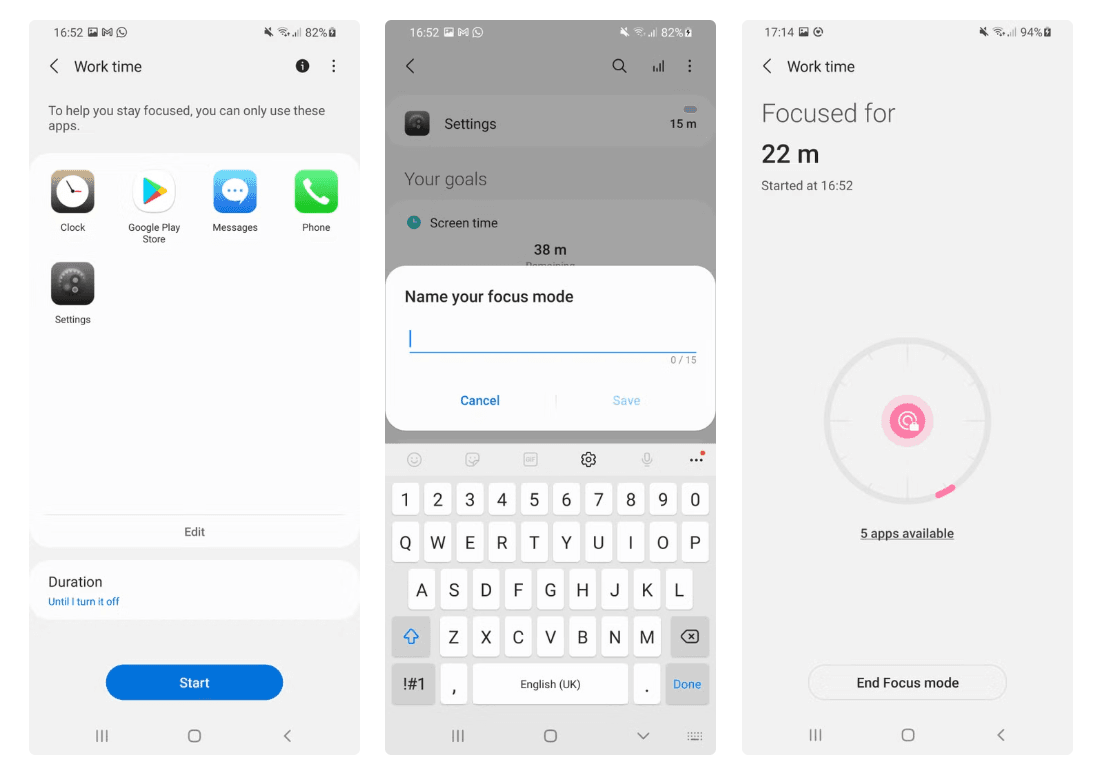
Apps you've selected are temporarily disabled while Focus Mode is active.
What to keep in mind: Focus Mode blocks apps in one tap, but it's easy to turn off if you're tempted. You can pair it with Do Not Disturb to silence calls and alerts from other sources.
How to Set App Limits on iPhone, iPad, or Mac
If you're on an Apple device, you already have powerful tools to manage screen time. Screen Time — built into iOS, iPadOS, and macOS — lets you set app limits, schedule downtime, and reduce distractions. It's also the answer to how to set a time limit on an iPhone for both yourself and your kids. Here are the four most effective methods.
1 Set App Limits in Screen Time
This is the most straightforward method. App Limits let you set a daily time cap for any app or category, like social networking or entertainment. Once the time is up, you'll get a notification that the app is no longer available for the day.
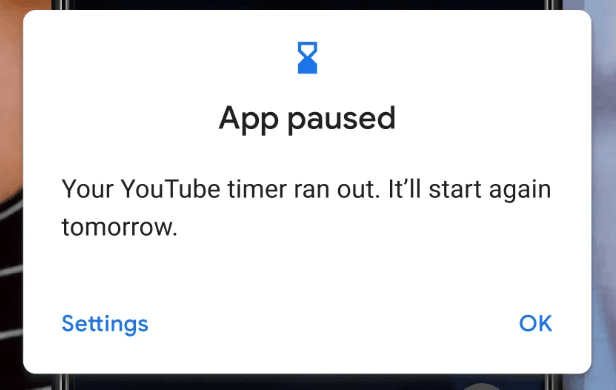
Best for: Reducing overuse of specific apps like Instagram, TikTok, or YouTube.
- Step 1. Go to Settings > Screen Time > App Limits.
- Step 2. Select one or more apps or entire categories.
- Step 3. Tap Next, then choose the amount of time allowed each day.
- Step 4. Tap Customize Days if you want different limits for different days.
- Step 5. Tap Add to confirm.
What to know: The limit can be bypassed by tapping "Ignore Limit" unless you've set a Screen Time passcode. Without the passcode, this feature relies on your self-discipline.
2 Set Up Downtime for Scheduled Breaks
Downtime blocks all but essential apps during certain hours, like before bed or while doing homework. During this period, only apps you mark as "always allowed" stay accessible.
Best for: Creating quiet times with fewer distractions — useful for evening routines or study time.
To set up Downtime:
- Step 1. Go to Settings > Screen Time > Downtime.
- Step 2. Tap Turn On Downtime Until Tomorrow or choose Scheduled.
- Step 3. Set the start and end times for when you want Downtime active.
- Step 4. Go back to the Screen Time page and select Always Allowed.
- Step 5. Choose the apps you want available during Downtime.
What to know: While Downtime blocks most apps and notifications, it can also prevent urgent messages from getting through unless those contacts or apps are marked as allowed.
3 Use Focus Mode to Cut Out Interruptions
Focus Mode filters out apps, people, and notifications when you need to concentrate. It works across all devices signed into the same Apple ID, including your Mac and Apple Watch.
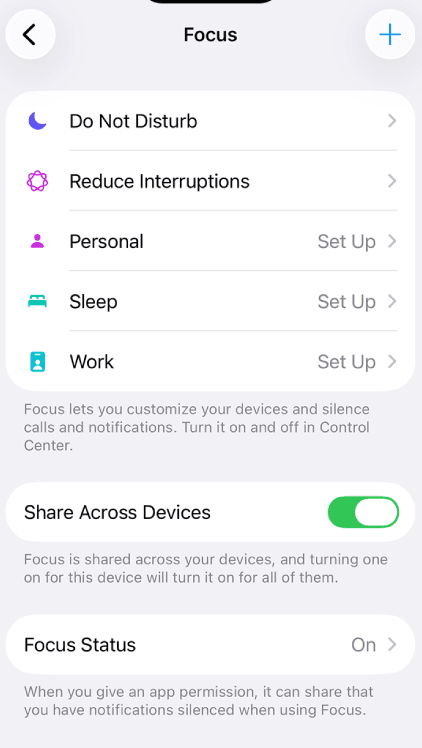
Best for: Deep work, studying, or sleep time when you don't want to be disturbed.
To set up Focus Mode:
- Step 1. Open Settings > Focus.
- Step 2. Choose a preset like Work, Sleep, or Personal, or tap Add to create a custom one.
- Step 3. Select the people and apps you want to allow or mute.
- Step 4. Tap Options to adjust how notifications appear.
- Step 5. Use Add Filter to control things like Mail accounts or Calendar visibility.
What to know: Focus Mode blocks alerts but doesn't stop you from opening apps. For stronger control, combine Focus with App Limits or Downtime.
4 Use Third-Party Apps
If Screen Time feels too easy to override, or you need more control over app access, try third-party productivity apps. Popular tools include AppBlock, Freedom, and StayFree. These let you block apps on a set schedule and notify you if you try to open a restricted app.
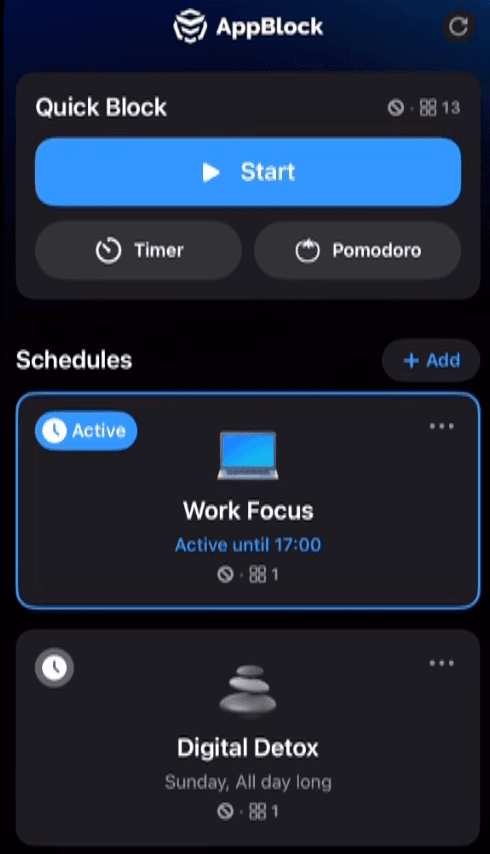
Best for: Users who need stricter rules and more custom control over when apps are blocked.
What to know: Many third-party apps limit features unless you upgrade to a paid version. Also, due to Apple's privacy restrictions, not all apps can be fully blocked on iOS, and some tools may require permission changes in Settings to work correctly.
How to Set Time Limits on Apps on Windows
If your child uses a Windows computer, or you're managing your own productivity, Microsoft provides helpful tools to control app usage. The main one is Microsoft Family Safety, which lets you set daily limits for apps and games, track usage, and schedule device time.
These features work across Windows 10, Windows 11, Xbox, and other Microsoft-connected devices, making them a good choice for families or anyone building stronger screen-time boundaries.
To get started:
- Step 1. Download and install the Microsoft Family Safety app from the Microsoft Store or Google Play.
- Step 2. Sign in with your Microsoft account.
- Step 3. Create a Family Group and add family members by email.
- Step 4. On your child's profile, tap Screen time.
- Step 5. Select Apps and games, then pick the app you want to limit.
- Step 6. Set a daily time limit and choose the days it applies.
- Step 7. The app is blocked once the daily limit is reached.
What to know: For the limits to work, your child needs to use a Microsoft account and stay signed in on the device. Not all desktop apps can be controlled through Family Safety — web-based games or programs installed outside the Microsoft Store may bypass restrictions unless filtered through the browser.
VigilKids: Advanced Parental Monitoring
Built-in app limits are great for managing time, but they don't tell you what your child is actually doing in those apps. If you want to go beyond screen-time caps and truly understand your child's digital activity, VigilKids offers deeper visibility. Unlike default phone settings, it provides real-time insight into how apps are used so you can step in immediately if something feels off. It pairs well with the built-in limits above — and works across devices as part of a broader parental control toolkit.
What VigilKids can do:
- Monitor WhatsApp activity — view chat logs, voice messages, call history, and shared media in real time.
- Phone monitoring — capture screenshots, listen to ambient sounds, and take remote photos using the device's camera.
- GPS location tracking — track your child's current location and review route history, with safety zones.
- Geofencing alerts — get notified instantly when your child enters or leaves a designated area like school or home.
- Keyword & risk alerts — receive instant alerts when flagged or dangerous keywords appear in messages or online content.
FAQs
Q1: How do I put a time limit on an app?
On Android, go to Settings > Digital Wellbeing > App timers. On iPhone, go to Settings > Screen Time > App Limits. Choose the app and set your daily limit.
Q2: How do I limit app time on Android specifically?
Use Digital Wellbeing's App timers for daily caps, Focus mode to block distracting apps during set periods, or Bedtime mode for nighttime. For a child's device, Google Family Link adds passcode-protected limits.
Q3: How do I set a time limit on a phone for my child?
On iPhone, use Screen Time with a passcode; on Android, use Family Link; on Windows/Xbox, use Microsoft Family Safety. For deeper visibility into app activity, a tool like VigilKids goes beyond simple time caps.
Q4: Can I lock apps temporarily on my phone?
Yes. Focus Mode and Downtime let you block apps for set periods. The apps aren't password-locked, but they become inaccessible until the session ends.
Q5: How do I set app limits on iPhone with a passcode?
Go to Settings > Screen Time > App Limits, set your limits, then enable "Use Screen Time Passcode" so no one can change or bypass them without the code.
Q6: Can I password-protect app limits on Android?
Android's built-in app timers don't support passcodes. For stronger restrictions, enable parental controls through Google Family Link for child accounts.
Conclusion
Knowing how to set time limits on apps is a simple but powerful way to take back control of your time. Whether you're reducing your own distractions or guiding your child's screen habits, the right tools make all the difference — from built-in features like Digital Wellbeing and Screen Time to smart parental apps like VigilKids. Start with the method that fits your device, and build better digital balance from there.