

Bonus Pick: VigilKids
Want to feel more present with your partner across the distance? VigilKids helps long-distance couples build understanding around digital habits and daily routines — always with mutual consent.
It's 11 PM where you are, 11 AM where they are. You just saw something that made you laugh out loud and you want to share it — but a text feels too small, and a call would wake them up. That's the quiet hard part of long-distance love: not the missing, but the everyday moments that don't have anywhere to land.
That's where long-distance relationship apps come in. Built for couples separated by time zones, work schedules, or oceans, these tools turn fleeting thoughts into small daily connections — shared photos on a home screen, synced movie nights, virtual hugs, calendars that translate "8 PM my time" into something your partner can actually see. The best part? Many of them work beautifully on free plans.
I've tested dozens of popular apps that claim to "keep couples in sync." Here are the 10 that genuinely work in 2026 — across iPhone and Android, across time zones, and across the kinds of LDR moments real couples actually deal with.
- Table Of Contents
- PART 1. What Makes a Good Long Distance Couple App?
- PART 2. Comparison Table: At a Glance
- PART 3. 💖 Best Apps for Long Distance Couples
- Cupla – Shared Calendar Across Time Zones
- Between – Private Couples Space
- SumOne – Daily Question App for Meaningful Conversations
- Paired – Relationship Growth & Honest Communication
- Evergreen – Emotional Check-ins
- Locket – Visual Connection via Widget
- Obimy – Playful Virtual Affection
- Rave – Long-Distance Movie Nights
- Couple Game – Quiz to Learn About Each Other
- BondBeyond – AI Relationship Coaching
-
💬 Bonus: For Couples Who Value Transparency and Understanding

PART 1. What Makes a Good Long Distance Couple App?
Not every "couples app" is worth your time. Some feel gimmicky, others hide their best features behind paywalls. Based on testing and community feedback, here's what separates a truly good long-distance app from the rest:
- Time-zone awareness: Schedules, reminders, and "good morning" messages should translate automatically. Doing time-zone math in your head every week wears couples down faster than the distance itself.
- Cross-platform compatibility: It needs to work smoothly on both iOS and Android. Otherwise, one person always gets a downgraded experience.
- Privacy and security: These apps handle private messages, photos, and emotions. A strong privacy policy and optional encryption matter more than flashy design.
- Real-time connection: Instant notifications or live widgets make the interaction feel alive. You shouldn't have to refresh the app just to see if your partner replied.
- Shared experiences, not just chat: Watching a film "together," answering the same question, sending a photo to a home-screen widget — these turn a screen into a shared space.
- Emotional bonding features: Daily questions, mood check-ins, or small "touches" like hugs and kisses help replace physical closeness with emotional presence.
- Free vs. paid balance: The free version should feel complete enough to build a habit. Paying later should unlock extras — not fix what's missing.
The best long-distance couple apps combine all of the above: they're private, time-zone friendly, emotionally engaging, and easy to use — even if one partner is on Android and the other on iPhone.
PART 2. Comparison Table: At a Glance
| App | Key Features | Free Version | Best For | Platforms |
|---|---|---|---|---|
| Cupla | Shared calendar with auto time-zone conversion | ✅ Free trial | Coordinating schedules across time zones | iOS / Android |
| Between | Private couples space, timeline, anniversary countdown | ✅ Free | A dedicated home for everything "us" | iOS / Android |
| SumOne | Daily question game, shared journal | ✅ Fully usable | Couples wanting gentle, consistent communication | iOS / Android |
| Paired | Quizzes, reflections, and relationship timeline | ✅ Basic access | Rebuilding closeness and improving communication | iOS / Android |
| Evergreen | Emotional check-ins, lessons, and "Water" reflections | ⚪ Limited content | Deepening emotional awareness and empathy | iOS / Android |
| Locket | Real-time photo widget on home screen | ✅ Free | Sharing everyday visuals and feeling "present" | iOS / Android |
| Obimy | Virtual hugs, kisses & mood sharing | ✅ Free | Playful digital affection and emotional connection | iOS / Android |
| Rave | Synced watch-along for movies, TV, YouTube | ✅ Free | Long-distance movie nights without spoiler timing | iOS / Android |
| Couple Game | Relationship quiz with guess-your-partner mechanics | ✅ Free | Learning new things about each other from afar | iOS / Android |
| BondBeyond | AI coach, shared values & progress tracking | ⚪ Limited tools | Strengthening trust and structured relationship growth | iOS / Android |
PART 3. 💖 Best Apps for Long Distance Couples
1. Cupla – Best for Coordinating Across Time Zones
Time zones are the unsung villain of long-distance love. "Are you free Saturday?" turns into a math problem — what's 8 PM your time, and will they be at work, asleep, or in the middle of dinner? Cupla solves this so cleanly that you stop noticing it.
It's a shared calendar built specifically for couples. Events you create show up in both partners' views, automatically converted to each person's local time. You can also share to-do lists, build wishlists for your next in-person visit, and set reminders — like a "good morning" nudge timed to when their day actually starts. Several Reddit users in LDRs described it as the first app that "didn't feel like an extra chore" because the scheduling happens once and works for both sides.
It's not flashy, and it won't replace the emotional apps below. But for couples whose biggest friction is logistics — when to call, when to fly out, when to plan the next visit — this is the operating layer underneath everything else.
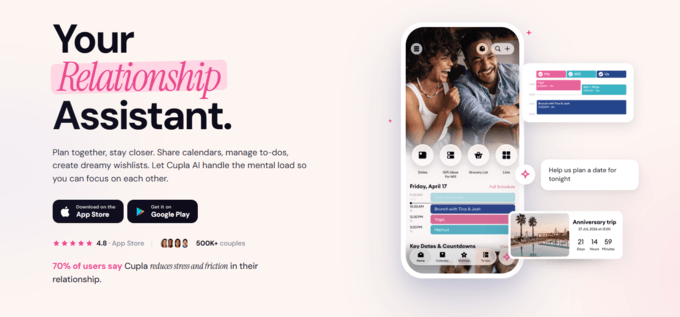
Key Features:
- Auto time-zone conversion for every event
- Shared to-do lists, wishlists, and reminders
- Side-by-side calendar view so you can spot mutual free time at a glance
- Eliminates time-zone math when scheduling calls or visits
- Lightweight — feels like a calendar, not yet another social app
- Works for couples and busy partnerships beyond LDR too
- Best features are behind a subscription after the trial
- No real "fun" or emotional layer — it's a utility, not a romance app
2. Between – Best for a Private Couples-Only Space
If your relationship currently lives across five different threads — iMessage, Instagram DMs, a shared Google Doc, that one Notion page — Between gives it a single home. It's a private messaging and timeline app built just for the two of you: photos, anniversaries, voice notes, and memories all live in one place that no algorithm or feed can interrupt.
The countdown to your next visit, the running list of restaurants you want to try when they fly in, the photo from your first trip — instead of getting buried in a crowded chat, they sit in a dedicated space you both maintain. For LDR couples especially, this turns the relationship into something you can both "open" and visit, even on days you can't talk much.
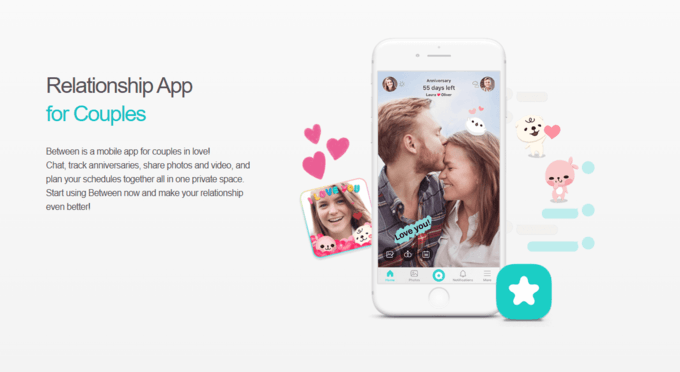
Key Features:
- Private chat, photo album, and shared memory box
- Anniversary and date countdown widgets
- Sticker packs and themes for couples who like a softer aesthetic
- Keeps relationship memories from getting lost in regular messaging apps
- Cute, low-key design that feels personal
- Has been around for years — stable and well-tested
- Some themes and sticker packs are paid
- Notifications can be slightly delayed compared to native messaging apps
3. SumOne – Best Free Daily Question App for Meaningful Conversations
Many couples on Reddit describe SumOne as a surprisingly effective way to stay emotionally connected — even when distance or time zones make calls difficult. One user in a long-distance relationship said it became a "cute, one-minute habit" that led to deeper conversations later over voice notes.
The app sends you and your partner one daily question. You don't have to answer at the same time, and your partner's response only appears once you've written yours. For people who find it hard to talk about feelings, that gentle structure can make emotional expression less intimidating.
Another user mentioned that the questions are often more insightful than expected — sometimes even helping them notice emotions they hadn't articulated before. While it's lighthearted on the surface, it quietly trains both partners to open up a little more each day.

Key Features:
- One shared question per day to spark reflection and dialogue
- Turn-based answering system (no pressure for instant replies)
- Optional notes, shared milestones, and "relationship pet" that grows over time
- Free, simple, and low-pressure — perfect for couples easing into communication
- Encourages emotional growth without long messages or forced talk
- Works well even with big time-zone gaps
- Some partners may find the emotional focus uncomfortable at first
- Not ideal if both prefer spontaneous or call-based communication
4. Paired – Best for Relationship Growth & Honest Communication
Paired isn't a gimmick — it's one of those apps that can genuinely help couples rebuild closeness when daily life starts to drift into parallel routines. Several Reddit users said it helped them "learn things about each other we didn't realize after years together," especially when they felt more like roommates than partners.
The app works through daily or weekly prompts — short, reflective questions and multiple-choice "games" that both partners answer. Your results get compared to show how well your answers align, and even where you might see things differently. It's not therapy, but it does create small, structured moments of honesty that can lead to bigger real-life conversations.
Still, some couples mentioned that their connection "stayed inside the app" — the questions were thoughtful but didn't always translate into changes outside it. Others simply found it hard to stay consistent. The takeaway: it works best when both people see it as a shared routine, not a chore.
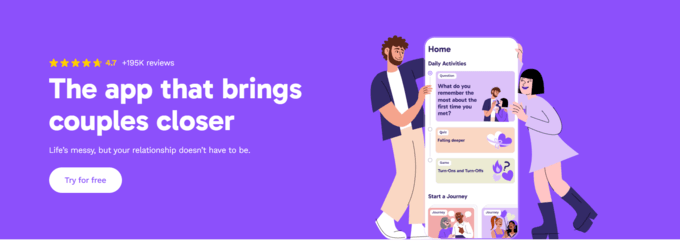
Key Features:
- Multiple-choice games and daily reflection prompts
- Relationship timeline and shared notes
- Insights that highlight communication gaps and strengths
- Helps couples rediscover empathy and curiosity about each other
- Clear, structured content — easy to follow and doesn't feel forced
- Free version includes basic quizzes; premium adds more depth
- Benefits fade if one partner isn't consistent
- Some users say "connection stays in the app" instead of extending offline
- Premium version slightly overpriced compared to its features
5. Evergreen – Best for Emotional Check-ins and Real Conversations
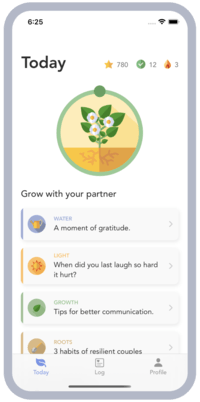
Evergreen turns your everyday phone habits into something that actually improves your relationship. Instead of scrolling through feeds separately, couples use short quizzes, daily reflections, and guided lessons to stay aware of how they're both feeling. Many users said the questions were deeper than expected and helped them express things they usually struggled to put into words.
It's not therapy, but it feels like a structured way to reconnect — whether you're rebuilding after conflict or just keeping communication healthy. The free version is generous enough to start with, while the paid plan adds more topics and guided exercises.
Key Features:
- Daily and weekly reflections: Individual and shared prompts that create a relationship journal you can look back on.
- Quizzes and lessons: Cover topics like communication, conflict, intimacy, gratitude, and stress — designed for solo or joint participation.
- "Water" activity: Both partners respond to the same prompt (e.g., "What memory of us instantly makes you smile?"), encouraging deeper real-life conversations.
- Progress and motivation: Includes points, streaks, and visual growth elements.
- Free and premium content: The free plan offers daily updates, while the subscription unlocks more activities and themed packs (with a 7-day annual trial).
- Subscription sharing: Developers claim one subscription covers both partners, though some users report being charged separately depending on region.
- Helps couples open up emotionally without pressure
- Easy to fit into busy schedules
- Free plan is enough to build a habit
- Some advanced content locked behind subscription
- Needs clearer reminders and better organization tools
Evergreen isn't about quick fixes — it's about small, consistent check-ins that quietly strengthen how you listen, respond, and care for each other.
6. Locket – Best for Visual Connection and Everyday Presence
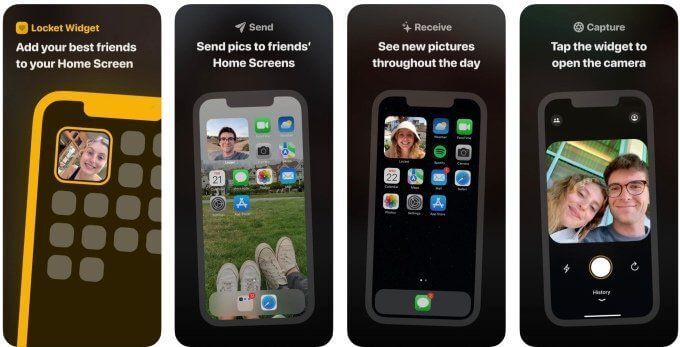
Locket is a simple idea that became one of the most personal apps for long-distance couples. It lets you send photos directly to your partner's home screen — they appear instantly inside a widget, no messages or notifications required. For many couples, it's a way to feel seen in small, everyday moments. (If you prefer hand-drawn doodles to photos, NoteIt works the same way with sketches and short notes.)
That said, the Reddit community's experience with Locket shows both sides of the story. Many love how spontaneous and intimate it feels — one tap, and your photo shows up on your partner's screen. But others point out that this same intimacy can lead to misunderstandings: photos feel personal, and who you share them with matters. Users have also reported small glitches, like disappearing photos or syncing issues between iOS and Android.
Still, when it works, Locket is one of the easiest ways to make your partner part of your day without needing to text or call.
Key Features:
- Real-time photo sharing via home screen widget
- Lightweight, no-chat interface that feels personal and instant
- Free to use, with optional Gold plan for extra friends and features
- Makes long-distance feel more immediate and connected
- Extremely simple to use — no setup, no clutter
- Creates small daily "presence" moments without pressure
- Occasional bugs (photo loss, login errors, slow updates)
- iOS and Android features aren't always aligned
- Can lead to emotional misunderstandings if used casually
7. Obimy – Best for Playful Virtual Affection
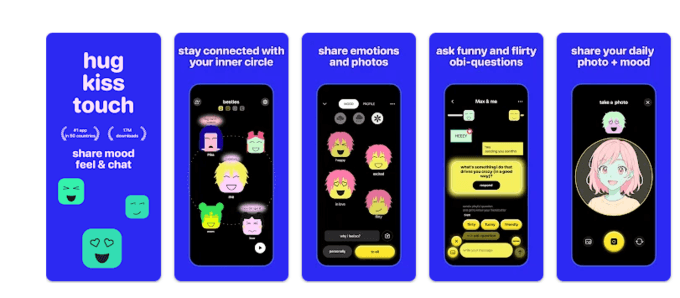
For couples who miss physical closeness, Obimy adds a fun twist. You can "send" hugs, kisses, or heartbeats that trigger animated vibrations on your partner's device. It also tracks moods and feelings, making digital affection feel surprisingly real — especially in the small in-between moments where a full text feels like too much but you still want them to know you're thinking of them.
Key Features:
- Virtual hugs, kisses, and touch animations
- Mood and heart-rate sharing
- Gentle daily emotion tracking
- Unique way to express affection from afar
- Visually charming and interactive
- Completely free for basic features
- Occasional bugs with notification timing
- Can feel a bit novelty-based for some users
8. Rave – Best for Long-Distance Movie Nights
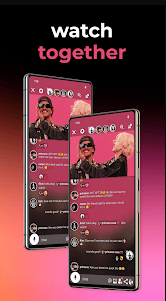
Ever tried to watch a show with your partner over FaceTime, both pressing "play" on three? Then they gasp three seconds before the jump scare, and the magic dies. Rave fixes that. It syncs video playback across both phones — Netflix, YouTube, Disney+, Amazon Prime, even Google Drive files — so you're both genuinely watching the same frame at the same time.
There's also a built-in voice chat and reactions overlay, so movie night feels less like coordinating two solo viewings and more like sitting on the same couch. For LDR couples, this is one of the simplest "we did something together tonight" rituals you can build.
Key Features:
- Synced playback across major streaming services
- Built-in voice chat and emoji reactions during the watch
- Works on both mobile and desktop
- Best free option for syncing streaming services
- Voice chat removes the awkward "you press play first" timing
- Friendly to slow or uneven internet connections
- Each partner still needs their own streaming subscription
- Occasional sync drift on long videos — easy to fix with a quick re-sync
9. Couple Game – Best for Learning New Things About Each Other
The trap of long-distance is that conversations start to loop: how was your day, what did you eat, when are we seeing each other. Couple Game breaks that. It's a relationship quiz where you both answer the same question and then guess what the other person said — "What's the most attractive thing about your partner?", "What's your favorite memory of us?", "What's one thing you wish you did more of together?"
The mismatches are often more interesting than the matches. You'll discover something you both assumed about each other was off, or a small preference that never came up in two years of talking. For LDR couples, it's a 10-minute ritual that turns into a 90-minute conversation more often than you'd expect.
Key Features:
- Hundreds of questions across love, intimacy, future plans, and daily preferences
- Score system showing how aligned (or revealingly different) your answers are
- Spicier categories available if both partners opt in
- Surfaces things you never thought to ask out loud
- Works asynchronously — answer when you're free, see results when both have answered
- Free version has plenty of content to start
- Some categories are repetitive after a few weeks
- Ad-heavy on the free tier; paid version removes most of them
10. BondBeyond – Best for Building Trust & Relationship Therapy
BondBeyond takes a more serious approach. It blends relationship coaching, shared goals, and AI-based reflections into one platform. Couples can define their values, work through trust topics, and chat with an AI relationship coach for perspective and exercises — especially useful for LDR couples navigating a rough patch without easy access to in-person therapy.
Key Features:
- AI coach for couples and individual chats
- Shared value mapping and health score
- Weekly trust and communication check-ins
- Great for couples rebuilding trust or improving communication
- Deep, structured conversations guided by AI
- Supportive community and progress tracking
- Heavier learning curve than casual apps
- Some advanced tools require a paid plan
💬 Bonus: For Couples Who Value Transparency and Mutual Understanding
Most apps on this list focus on emotional connection. But some long-distance couples — especially those rebuilding trust after a tough patch, or supporting a partner through stress and big life changes — also want a clearer, shared picture of daily wellbeing. Not surveillance. Just visibility, agreed on by both people.
That's where VigilKids can play a role. Originally built for family digital wellbeing, it now supports consenting partners who want a transparent view of phone habits and routines as a starting point for honest conversations — not as a way to monitor each other from the shadows.
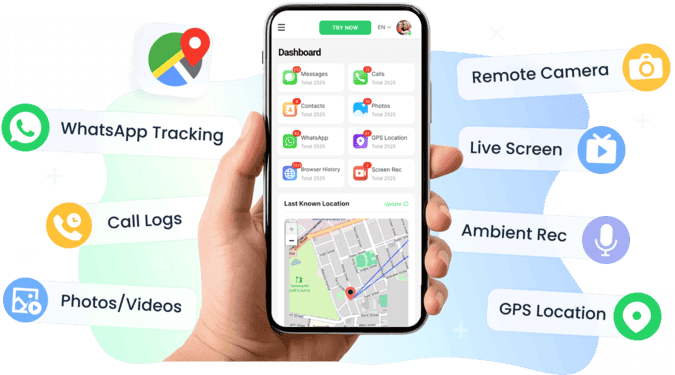
How couples use it:
- Shared screen-time overview to talk about balance and presence
- Location history (with consent) for peace of mind during travel or busy work weeks
- App usage and communication patterns on WhatsApp — useful for couples being intentional about phone time, especially during scheduled calls
- Shared photo and media history — surfaces memories worth talking about, not things to police
- AI insights that flag stress or routine changes worth checking in about
❤️ Final Thoughts
Long-distance love isn't about keeping your phone glued to your hand — it's about making the small gestures land, even across time zones. A photo through Locket. A quiet daily question on SumOne. A virtual hug through Obimy. A movie night synced through Rave. Or simply a "good morning" scheduled on Cupla so it arrives at exactly the right moment of their day.
Pick one or two of these and build the habit. The apps don't replace the relationship — they just give the everyday moments somewhere to land.