

When doubt starts creeping in but you don’t know how to bring it up, what do you do?
VigilKids helps you see WhatsApp messages, texts, and call activity clearly—so you can stop guessing and rebuild your relationship with honesty and understanding.
How long has it been since you and your husband or wife enjoyed romantic moments together, just the two of you, like you did during your first love?
Most couples face the disappearance of that first-love spark after having children or being married for a long time, replaced by a marriage that feels like roommates.
“How to get out of the roommate phase?” is far from uncommon. In today's article, we'll offer multiple methods to help you break free from the “roommate” phase.

- Table Of Contents
- What Causes the Roommate Phase of Marriage?
-
7 Ways to Get Out of The Roommate Phase

PART 1. What Causes the Roommate Phase of Marriage?
The “roommate phase” in marriage doesn’t just appear suddenly — it’s usually the result of gradual changes in routine, energy, and emotional priorities. Here are some of the most common reasons couples drift into it:
- 1.Daily routines replacing emotional connection
- 2.Parenthood and work stress
- 3.Lack of intentional effort to maintain intimacy
- 4.Unresolved conflicts and transactional communication
- 5.Emotional withdrawal and loss of vulnerability
Many couples find that their relationship state changes after becoming parents, as responsibilities and digital distractions increase. Tools like VigilKids can help parents protect kids' online lives.
PART 2. 7 Ways to Get Out of The Roommate Phase
Many couples don't want their marriage to feel like roommates, but it's undeniable that most couples inevitably find themselves in this situation.
Below are seven proven ways to reconnect with your spouse and move your marriage out of the roommate phase.
1 Prioritize Your Relationship Above Everything Else
When everything feels hectic — kids, work, bills, and endless to-do lists — it’s easy to let your relationship fall to the bottom of the priority list. But here’s the truth: your marriage sets the tone for your family’s entire emotional environmeƒnt.
If you treat your relationship as optional, it becomes optional. The first step in escaping the roommate phase is to consciously decide that your marriage comes first. That means setting boundaries around your time, protecting moments of connection, and saying no to distractions that pull you away from each other.
Start by having an honest conversation with your spouse:
- “I miss feeling close to you.”
- “I want us to make time for just us again.”
Once both partners acknowledge that reconnecting matters, you can begin to take small daily actions — even five minutes of intentional attention — that remind each other, “You still matter to me.”
2 Bring Back Daily Affection and Small Gestures

When you’re trying to get out of the roommate phase in marriage, affection doesn’t have to be dramatic. It’s the small, daily gestures — a kiss before bed, a warm hug, saying “I love you” sincerely — that rebuild emotional closeness over time.
These simple acts remind your partner they still matter beyond routines and responsibilities. Physical touch and kind words help lower tension and restore intimacy naturally.
Try small changes:
- Start and end your day with a kiss or hug.
- Say “thank you” or “I love you” with intention.
- Leave short notes or messages to show care.
- Share moments of humor or light touch during daily life.
3 Date Your Spouse Like It’s the First Time
One of the best ways to get out of the roommate phase in marriage is to bring back the excitement of your early days together. When life gets busy with work and kids, dates often disappear — but intentional time alone is what keeps romance alive.
Plan real dates, not just errands. Go somewhere new, try a hobby together, or revisit a place that holds memories from when you first met. These experiences create novelty and help you see each other in a fresh light.
If you have children, arrange a babysitter or trade childcare with another couple. Even a short dinner, a walk at night, or a coffee break without distractions can make a difference.
You don’t need a fancy restaurant — just time that’s about you two, not schedules or responsibilities. Regular date nights remind both partners why you chose each other, and that spark is worth keeping alive.
Couple Apps: 11 Brilliant Tools to Turn Up the Heat in Your Relationship
4 Create Rituals of Emotional Connection
Emotional closeness doesn’t just appear — it’s built through consistent moments of connection. Creating small rituals helps couples stay emotionally in tune even when life feels busy or stressful.
Set aside intentional time to talk and listen. For example, spend 30 minutes before bed sharing how your day went, your worries, or something you're grateful for. Don't rush to fix problems — instead, practice emotional validation by simply acknowledging each other's feelings.
You can also build connection through shared rituals, like a weekly date night, Sunday breakfast together, or revisiting a place that reminds you of your early days. These habits create a rhythm of togetherness and remind you that your relationship deserves attention — not just maintenance.
Over time, these small, consistent rituals turn into emotional anchors that keep your marriage steady and connected.
5 Share Household and Parenting Responsibilities
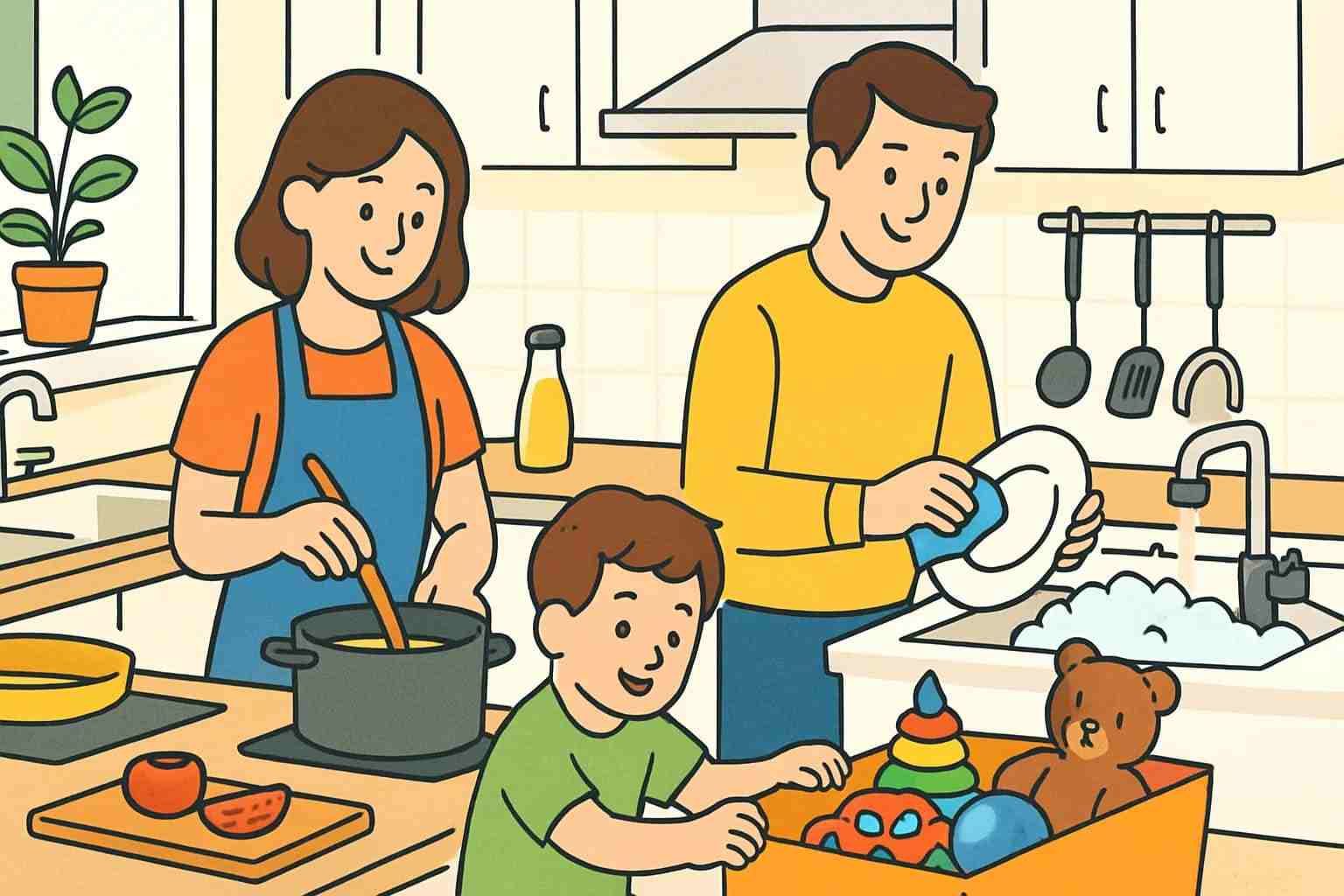
Nothing kills a connection faster than one partner feeling overwhelmed or unappreciated. When daily chores and childcare fall mostly on one person, resentment quietly grows — and emotional distance follows.
To get out of the roommate phase in marriage, start by viewing housework and parenting as teamwork, not personal duty. Talk openly about what feels fair and where each of you can help more.
Small adjustments can make a big difference. Cook together, clean up side by side, or take turns putting the kids to bed. These shared moments reduce stress and naturally build closeness.
When both partners feel supported, the relationship becomes lighter, warmer, and more balanced — a space where love can grow again.
6 Build a Support Network with Other Couples
Marriage can feel isolating when all your energy goes into work and parenting. Building friendships with other couples — especially those with children around the same age — helps remind you that you're not alone in this stage of life.
Having couple friends gives you people to share experiences with, vent frustrations, and exchange advice. It also opens practical support — for example, trading childcare so each couple can enjoy a date night or some quiet time together.
Spending time with other healthy, supportive couples can even inspire positive habits in your own relationship. Seeing how others communicate and balance life often encourages you to nurture your own bond more intentionally.
A strong support network lightens emotional burdens and helps you and your partner feel part of a larger, caring community — not just two people surviving together.
Today's parenting challenges also happen online. Many parents use tools like VigilKids to stay informed about their children's digital lives and to share healthy approaches to online safety within their parenting circle.

7 Seek Professional Help When Needed
Sometimes, getting out of the roommate phase in marriage requires more than effort — it needs guidance. When repeated attempts to reconnect still feel stuck, seeking help from a marriage counselor or therapist can make a real difference.
A professional offers a neutral space where both partners can express feelings openly and learn healthier ways to communicate. Counseling isn't about blaming one another; it's about understanding patterns, rebuilding trust, and learning tools to strengthen your relationship.
If one partner feels hesitant, remind them that therapy isn't a sign of failure — it's a sign of commitment. Many couples rediscover closeness and understanding through counseling after years of emotional distance.
Sometimes, the bravest thing you can do for your marriage is to admit you can't fix it alone — and that's exactly where healing begins.
Conclusion
When the spark fades and daily life takes over, every marriage can slip into the roommate phase. But that phase doesn't have to be permanent. Reconnection begins with small, intentional steps — prioritizing your relationship, showing daily affection, creating emotional rituals, and asking for help when needed.
Love in marriage isn't about constant excitement; it's about choosing to stay engaged, even when life feels ordinary. Each effort, no matter how small, is a reminder that your relationship still matters.
The truth is, getting out of the roommate phase isn't a one-time fix. It's a continuous process of learning, adjusting, and rediscovering each other. But with patience and consistency, you can rebuild warmth, trust, and partnership — the kind that lasts long after the first spark fades.
Family connection isn't just between couples — it extends to how you communicate and stay present with your children. If you're looking to strengthen that connection in the digital age, VigilKids can help you stay engaged and informed as a parent.